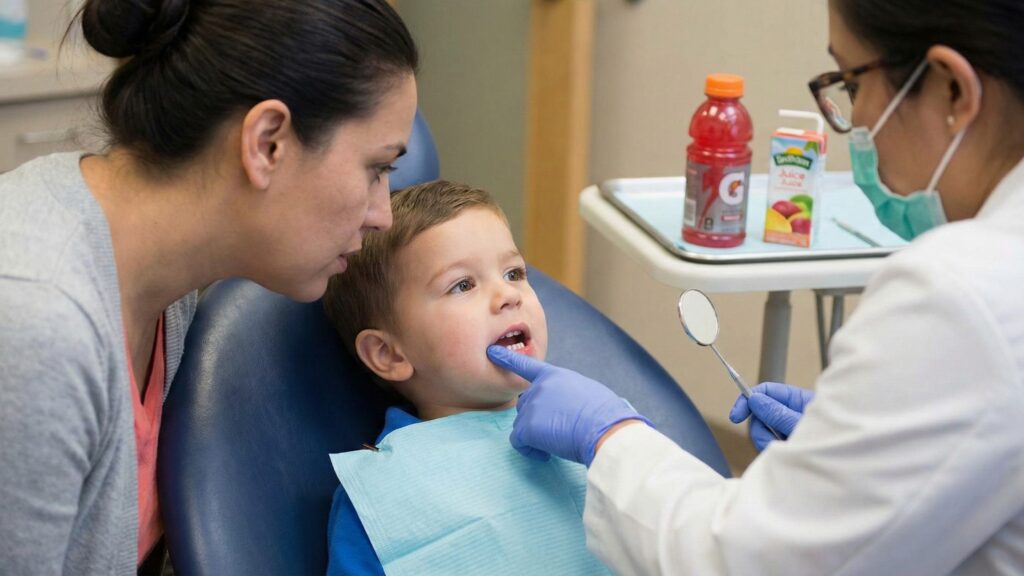
As parents, you do everything right. You’ve limited the candy, you’ve banned soda from the dinner table, and you make sure brushing happens twice a day. Yet, you find yourself sitting in my chair, shocked to hear that your child has early signs of tooth decay or enamel loss.
“But they only drink water and sports drinks!” is a phrase I hear almost daily.
Here is the hard truth: The war on sugar has distracted us from a quieter, equally destructive enemy—acid. While you may be vigilantly checking labels for sugar content, many “healthy” hydration options like sports drinks, flavored waters, and even diluted juices are wreaking havoc on your child’s teeth through chemical erosion.
Sudden sensitivity often leads parents to search for an [Emergency dentist near me](Emergency dentist near me), fearing a broken tooth or infection, only to discover that the culprit is actually a beverage they packed in their child’s lunchbox.
The Myth: It’s Not Just About Bacteria
For decades, we have been taught a simple equation: Sugar + Bacteria = Cavities.
While this is true, it is not the only way teeth are destroyed. The traditional cavity is caused when bacteria in the mouth eat sugar and excrete acid as a waste product. That acid then eats a hole in the tooth.
However, there is a second pathway that cuts out the middleman entirely: Dental Erosion.
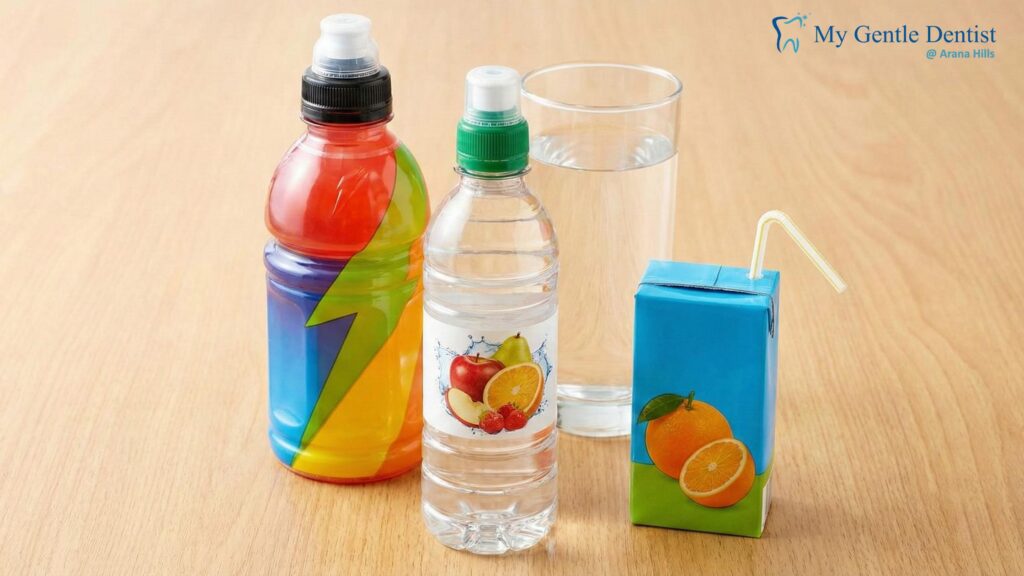
This occurs when acidic liquids come into direct contact with the tooth. You don’t need bacteria or plaque for this to happen. If a drink is acidic enough, it begins to chemically dissolve the outer layer of the tooth immediately upon contact.
To explain “Acid Wear” simply: It softens the shell of the tooth.
Think of your child’s tooth enamel like the hard shell of an egg. It is incredibly strong, but if you leave it in vinegar, it becomes soft, chalky, and weak. Once that shell is softened, it can be brushed away or worn down, exposing the sensitive, yellow dentin underneath.
The Science: Understanding the pH Scale
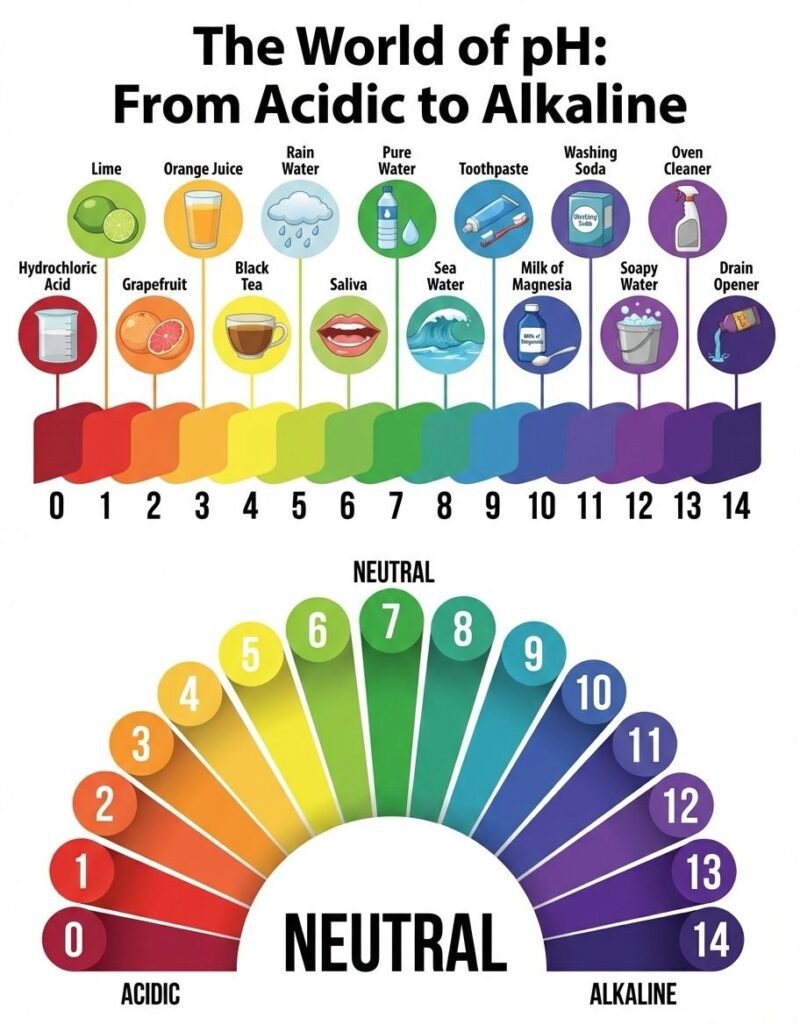
To understand why this happens, we have to look at the chemistry of what our children are drinking. In the world of dentistry, we look at the pH scale to determine safety for enamel.
The pH scale ranges from 0 to 14.
- 7 is neutral (Water).
- Lower numbers are acidic.
- Higher numbers are alkaline.
Here is the critical number you need to know: 5.5.
When the pH in the mouth drops below 5.5, tooth enamel begins to demineralize (dissolve). The lower the number, the stronger the acid.
The pH of Popular “Healthy” Drinks
Many parents are shocked to learn where their go-to beverages fall on this scale:
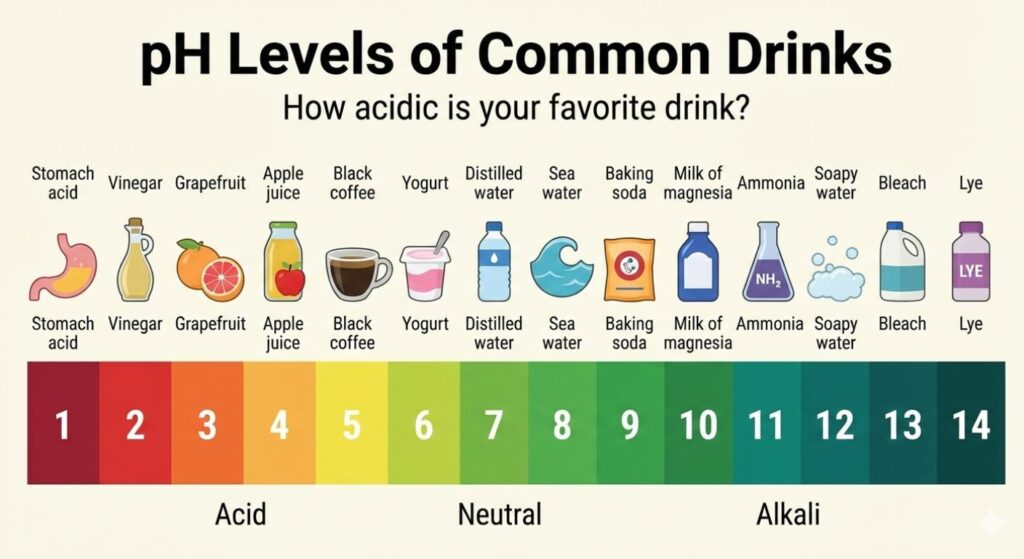
- Pure Water: pH 7.0 (Safe)
- Milk: pH 6.5 (Safe)
- Root Beer (interestingly less acidic than many fruit drinks): pH 4.0 (Danger Zone)
- Orange Juice: pH 3.5 (Erosive)
- Sports Drinks: pH 2.5 – 3.0 (Highly Erosive)
- Lemonade / Sour Candies: pH 2.0 – 2.5 (Extremely Destructive)
Even sugar-free sparkling waters often contain carbonic acid or citric acid for flavor, dropping their pH well below the safety zone of 5.5. A drink does not need to be sweet to be dangerous; it just needs to be acidic.
The “Sipping” Problem: Why Habits Matter More Than Volume
It isn’t just what your kids are drinking; it is how they are drinking it.
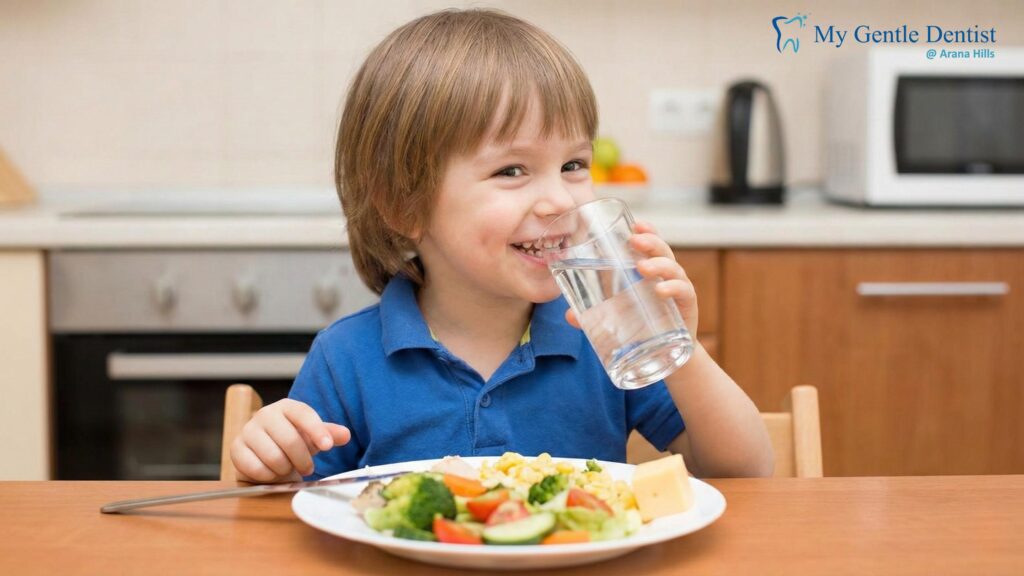
Saliva is your child’s superhero. It contains calcium and phosphate that help remineralize teeth and wash away acids. After a few sips of an acidic drink, it takes saliva about 30 minutes to neutralize the mouth and bring the pH back up to a safe level.
If your child chugs a juice box with lunch, their mouth is acidic for about 30 minutes. However, if they have a sports drink in a spill-proof cup that they sip on during a two-hour soccer game or while watching a movie, their mouth never gets the chance to recover.
The “Sipping” scenario creates a constant acid bath.
This is a critical component of modern kids dental health that is often overlooked. We see children who carry water bottles filled with flavored additives or diluted juice, sipping every 10 minutes. This keeps the pH of the mouth below 5.5 for hours at a time, essentially melting the enamel layer by layer.
The Hidden Culprits in Your Pantry
Let’s look at the specific drinks that usually fly under the radar.
1. Sports Drinks
Marketing has convinced us that children need electrolyte replacement after 20 minutes of running around in the backyard. The reality is that sports drinks are often loaded with citric acid to give them that “tangy” flavor and prolong shelf life. They are among the most erosive beverages available. Unless your child is an elite athlete engaging in high-intensity endurance sports for over an hour, plain water is almost always sufficient.
2. Flavored Waters
“It’s just water with a hint of fruit!” Sadly, that hint of fruit usually comes with added acids (citric, malic, or tartaric). While better than soda, they are not neutral like plain water.
3. Chewable Vitamin C
While not a drink, many parents give these to boost immunity. Ascorbic acid (Vitamin C) is highly acidic. Chewable vitamins stick to the grooves of the teeth, causing localized erosion.
The Solution: Protecting Enamel Without Dehydration
You don’t have to ban every beverage other than tap water, but you do need a strategy. If you want to protect your child’s smile, here is the protocol I recommend to all my patients.
1. Water is For Thirst, Juice is a Treat
Reframe how you view beverages. Water (fluoridated tap water is best) should be the only fluid consumed for hydration throughout the day. Juice, sports drinks, and flavored waters should be treated like cake—consumed on occasion, not as a daily staple.
2. The “All at Once” Rule
If your child is going to have a sugary or acidic drink, have them drink it in one sitting, preferably with a meal. The production of saliva increases during eating, which helps buffer the acid.
3. Use a Straw
When drinking acidic beverages, using a straw (positioned towards the back of the mouth) can minimize the liquid’s contact with the teeth.
4. The Cheese Chaser
This is a favorite trick of mine. After a meal or an acidic drink, give your child a cube of cheese. Cheese is alkaline and helps neutralize the acid in the mouth quickly. It also provides calcium!
5. Wait to Brush
This is counter-intuitive. If your child drinks a sports drink, do not have them brush immediately. Remember, the acid has softened the “shell” of the tooth. If you brush immediately, you are physically scrubbing away the softened enamel. Wait at least 30 to 60 minutes for saliva to harden the enamel before brushing.
6. Prevention Through Professional Care
Prevention is always cheaper and less painful than a cure. To prevent this, you want the [Best dentist near me for kids](Best dentist near me for kids) who takes a proactive approach to enamel wear. A specialist can apply fluoride varnishes that act as a shield, hardening the enamel and making it more resistant to acid attacks.
Conclusion: Catching Erosion Early
Erosion is silent. In the early stages, it doesn’t hurt, and the teeth just look a little shinier or slightly translucent at the edges. By the time your child complains of sensitivity to cold water or sweets, significant damage has often already been done.
This is why routine screenings are non-negotiable. When you search for a dentist near me for kids, look for a practice that discusses diet and acidity, not just brushing and flossing.
If you are noticing that your child’s teeth look slightly yellow, chalky, or transparent at the tips, it is time to act. A search for a childrens dentist near me can connect you with a specialist who can identify erosion before it becomes a cavity.
Don’t wait for pain to be the motivator. Whether you are looking for a childs dentist near me for kids for a routine checkup or an emergency visit, understanding the chemistry of what your child drinks is the first step toward a lifetime of strong, healthy smiles.
Stick to water, skip the constant sipping, and keep that enamel strong.
Key Takeaways for Parents:
- Acid vs. Sugar: Acidic drinks dissolve enamel even without sugar.
- The Danger Zone: Any drink with a pH below 5.5 dissolves teeth. Sports drinks are often around pH 3.0.
- Sip vs. Gulp: Constant sipping is worse than drinking it all at once.
- The 30-Minute Rule: Wait 30 minutes after an acidic drink before brushing.
Disclaimer: This blog post is for informational purposes only and does not constitute medical advice. Always consult with your dental professional for specific concerns regarding your child’s oral health.