
Introduction
There are few things as disruptive and distressing as sudden, severe tooth pain. It strikes without warning—often in the middle of the night or right before a long weekend. In these moments of panic, knowing exactly what to do and who to call can save your tooth and spare you from excruciating discomfort.

If you live in Brisbane’s north-west, having the contact details of an emergency dentist ferny grove saved in your phone is a household necessity. This guide outlines what constitutes a true dental emergency, immediate first-aid steps you can take at home, and how local Hills District clinics handle urgent care.
Table of Contents
- What is a Dental Emergency?
- Severe Toothaches and Abscesses
- Trauma: Knocked-Out or Broken Teeth
- Lost Fillings and Crowns
- Immediate First-Aid Steps Before You Arrive
- Why Local Proximity Matters in an Emergency
- Frequently Asked Questions (FAQ)
- Conclusion
What is a Dental Emergency?
Not every twinge of pain requires a midnight dash to the clinic. However, you should contact an emergency professional immediately if you experience:
- Unbearable pain that isn’t managed by over-the-counter medication.
- Bleeding from the mouth that will not stop.
- Trauma to the face or teeth (e.g., a sporting injury or fall).
- Visible swelling in the mouth, face, or neck.
- A permanent tooth that has been knocked out.
Severe Toothaches and Abscesses
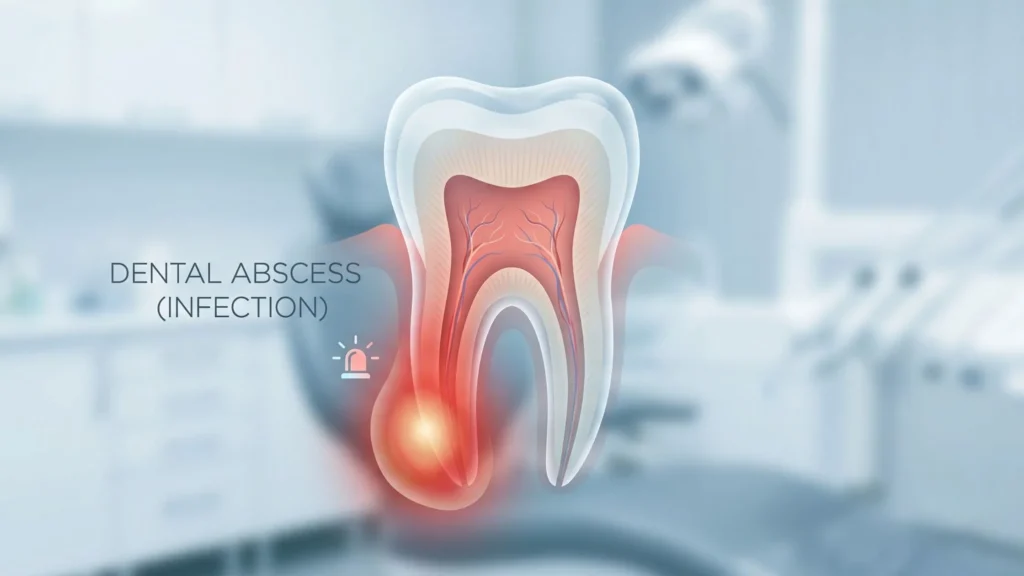
A toothache is your body’s alarm system. If the pain is throbbing, keeps you awake, or is accompanied by a fever and facial swelling, you likely have a dental abscess. An abscess is a severe infection at the root of the tooth or between the gum and tooth. Left untreated, the infection can spread to your jaw, head, or neck. This is a critical situation where you must seek an emergency dentist ferny grove without delay.
Trauma: Knocked-Out or Broken Teeth
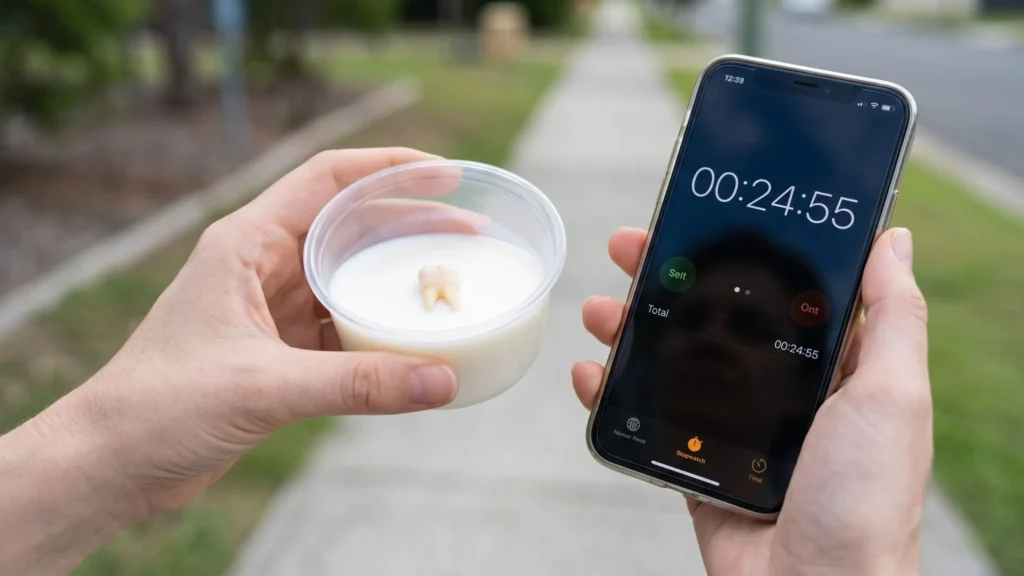
A knocked-out (avulsed) tooth is the most time-sensitive dental emergency. If you act quickly, the tooth can often be saved and successfully reimplanted.
- Pick the tooth up by the crown (the white chewing surface), NEVER by the root.
- If dirty, rinse it gently in milk or saline (do not scrub or use water).
- Try to place it back into the socket. If that’s not possible, store it in a container of milk or your own saliva.
- Get to a dentist within 30 to 60 minutes.
Lost Fillings and Crowns
While losing a filling or crown might not seem as dramatic as a knocked-out tooth, it exposes the sensitive inner layers of your tooth to bacteria and extreme temperatures. It requires prompt attention. Keep the crown safe and bring it with you to your appointment; your dentist may be able to recement it.
Immediate First-Aid Steps Before You Arrive
While you are arranging an appointment with an emergency dentist keperra or Ferny Grove, you can manage the situation at home:
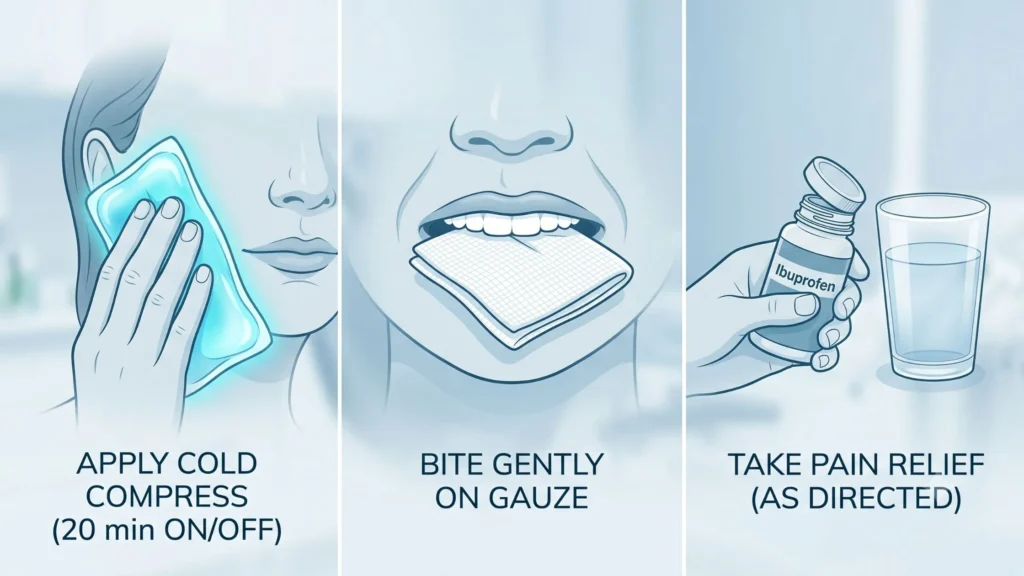
- For swelling: Apply a cold compress to the outside of your cheek for 20 minutes on, 20 minutes off.
- For bleeding: Bite down gently on a clean piece of gauze or a tea bag.
- For pain: Take ibuprofen or paracetamol as directed (do not apply aspirin directly to the gums as it causes chemical burns).
Why Local Proximity Matters in an Emergency
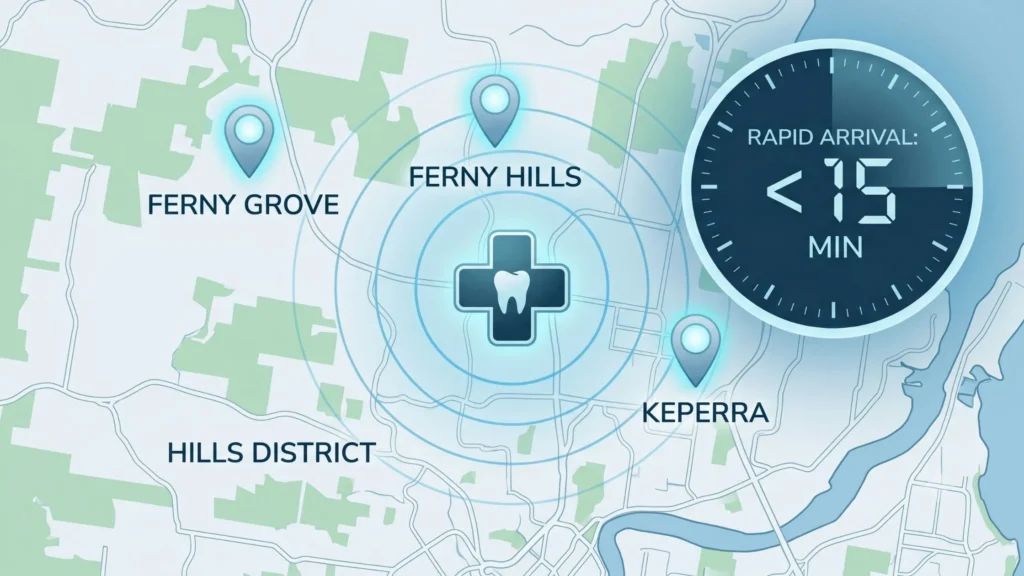
When you are in pain or bleeding, the last thing you want to do is drive 45 minutes across the city. Having an established network in the Hills District is vital. Whether you end up seeing a dentist ferny grove, a dentist ferny hills, or a family dentist ferny hills, local proximity ensures rapid triage and pain relief. Local clinics understand the community, and many keep specific daily buffer slots open purely for unexpected trauma and pain management.
Frequently Asked Questions (FAQ)
| Question | Answer |
| Should I go to the hospital emergency room for a toothache? | Hospital ERs generally do not have dentists on staff. They can provide pain relief and antibiotics but cannot fix the underlying dental issue. Always call an emergency dentist first unless the swelling is affecting your breathing or eye. |
| How much does an emergency dental visit cost? | Costs vary depending on the treatment required (e.g., extraction vs. root canal). However, treating an issue immediately is always cheaper than dealing with the complications of ignoring it. |
| Can a knocked-out baby tooth be put back in? | No. Reimplanting a baby tooth can damage the developing adult tooth underneath. However, you should still see a dentist to ensure no root fragments remain and to check for hidden trauma. |
Conclusion
Dental emergencies are frightening, but being prepared makes all the difference. Recognising the signs of a critical issue—like severe swelling, unrelenting pain, or a knocked-out tooth—and acting decisively will protect your oral health. Keep the number of a trusted emergency dentist ferny grove accessible, understand basic dental first aid, and remember that when it comes to dental trauma, time is always your most important asset.