By a Pediatric Trauma Dentist & Emergency Care Specialist
There was a time when the typical Monday morning emergency in my dental chair was the result of a weekend spent on a bicycle, a trampoline, or perhaps a mishap at the local swimming pool. Those were the classic hallmarks of childhood dental trauma. However, the landscape of pediatric injury is shifting rapidly. Today, the injuries I treat are increasingly moving from the backyard into the living room, driven by the immersive, high-energy world of Virtual Reality (VR) gaming.
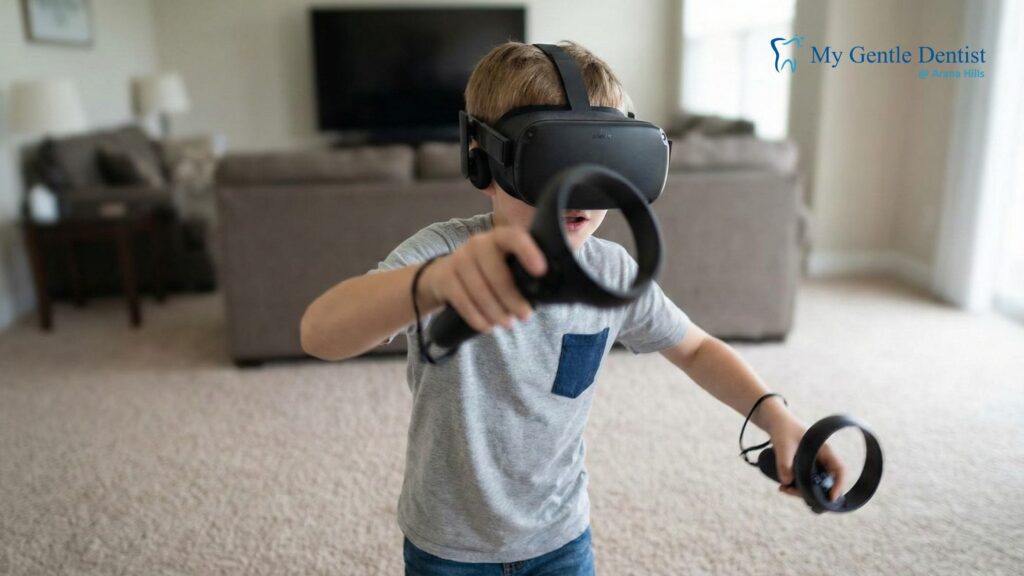
As a specialist in pediatric trauma, I have witnessed a statistical uptick in “virtual” accidents resulting in very real, often complex, physical damage. It is a unique phenomenon: a child is physically present in a safe, carpeted room, yet mentally navigating a warzone, a dance floor, or a boxing ring. This disconnect—where the brain believes it is in a boundless space while the body is confined by walls and furniture—creates a perfect storm for facial injuries.
If you have stumbled upon this article because you are currently holding an ice pack to your child’s swollen lip, or because you are staring at a piece of tooth in your hand, I want you to pause. Take a deep breath. Panic is the enemy of good decision-making. You are not the first parent to face this, and you will not be the last. Dental trauma, while frightening, is highly treatable when managed correctly.
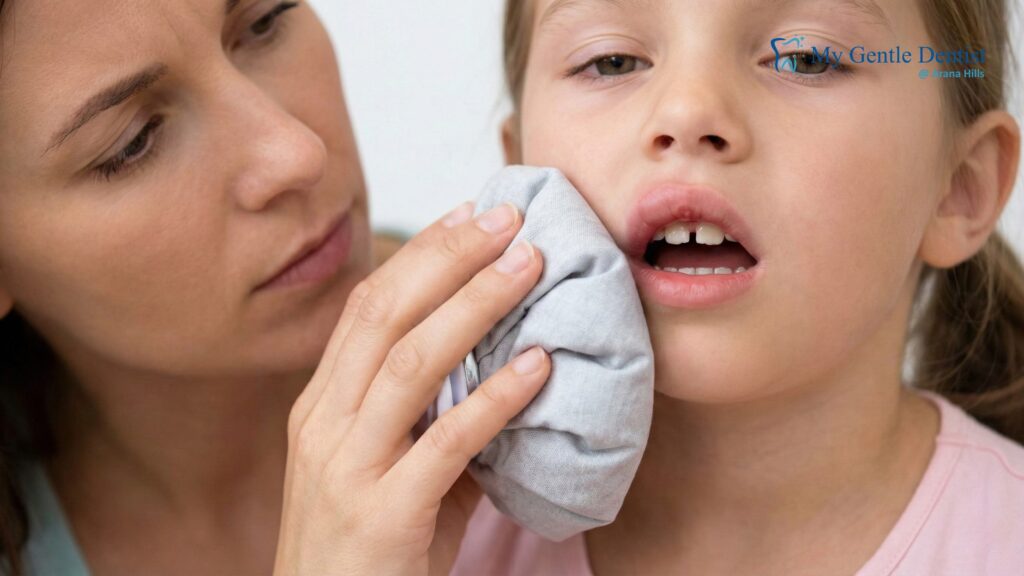
It is becoming incredibly common for parents to find themselves frantically searching for an Emergency dentist near me immediately following a gaming session that went wrong. This guide is designed to be your comprehensive resource for the next 24 hours. We will cover immediate first aid, the specific mechanics of VR injuries, the biology of tooth trauma, and why professional intervention is non-negotiable.
The New Hazard: How VR Changes the Game
To understand how to treat these injuries, we first have to understand how they happen. Traditional video games were sedentary; you sat on a couch with a controller in your lap. The risk to teeth was non-existent.
Virtual Reality changes the equation entirely. It effectively blindfolds your child. The headset completely obscures their vision of the real world, replacing it with a digital environment. Simultaneously, the game mechanics often demand rapid, forceful movements. Whether they are dodging bullets in a shooter game or slashing through blocks in a rhythm game, children often lunge, duck, and swing with full commitment.
This creates two distinct categories of dental trauma:
- The Projectile (Controller) Injury: Self-inflicted blunt force trauma.
- The Blind Impact (Headset/Fall) Injury: Collision with the environment or the floor.
Mechanism of Injury 1: The “Controller to the Face”
The most frequent injury I see in my practice involves the handheld controllers. In games like Beat Saber or Gorilla Tag, the player must swing their arms wildly to interact with virtual objects. When a child becomes disoriented, or when they attempt a movement that brings their hands across their midline, they can easily strike themselves in the face with the controller.
These controllers are made of hard, dense plastic. When swung by an adrenaline-filled child, they carry significant velocity. If that plastic connects with the central incisors (the two large front teeth), the result is immediate blunt force trauma.
In dentistry, we categorize the damage from this type of impact into several tiers:
Enamel Crazing
These are vertical hairline cracks in the enamel. They do not extend into the dentin (the softer layer beneath the enamel) and usually do not require restorative treatment. However, they can absorb stains over time and may indicate that the tooth has absorbed a shock that could affect the nerve.
Uncomplicated Crown Fractures
This is what most parents recognize as a “chipped tooth.” A piece of the enamel, and sometimes the dentin, breaks off. If the dentin is exposed, the tooth will be sensitive to cold air and sugary foods. While not always a dire emergency, these need to be sealed quickly to prevent bacteria from entering the tubules of the dentin.
Complicated Crown Fractures
This is a dental emergency. The fracture is deep enough to expose the pulp—the living center of the tooth containing the nerves and blood vessels. You might see a small red dot in the center of the broken surface. This is the nerve bleeding. Immediate care is required to save the vitality of the tooth.
Mechanism of Injury 2: Headset Impact and “Blindfolded” Falls
The second category of injury involves the headset itself. Because the child cannot see their surroundings, trips and falls over rugs, furniture, or family pets are distressingly common.
When a child falls face-forward while wearing a VR headset, the device acts as a heavy, protruding object. In a normal fall, a child might turn their head or catch themselves with their hands. In a VR fall, they often don’t realize they are falling until it is too late. Upon impact with the floor or a piece of furniture, the headset is often jammed upward or backward into the mouth.
This mechanism usually results in significant soft tissue injury. We see:
- Lacerations: Cuts to the inner lips caused by the teeth being pressed against them.
- Frenum Tears: The tearing of the small piece of skin that connects the upper lip to the gums. This bleeds profusely and looks terrifying, though it often heals well without sutures.
- Alveolar Fractures: In severe cases, the bone housing the teeth (the alveolus) can fracture. The teeth may move together as a block when you touch them.
Immediate First Aid: The “Golden Hour”
The first hour after a dental injury is often called the “Golden Hour.” The decisions you make now can determine whether a tooth survives for a lifetime or is lost within a year.
If the accident just happened, follow this protocol. Be the calm, directive voice your child needs.
Step 1: Assessment and Bleeding Control
The mouth is highly vascular, meaning even small cuts bleed heavily. This can be shocking for both the parent and the child.
- Have your child sit upright. Lying down can increase blood pressure to the head and increase bleeding.
- Use a clean washcloth or sterile gauze to apply firm, gentle pressure to the bleeding area.
- If the lip is swollen, check inside the mouth to ensure there are no tooth fragments embedded in the soft tissue (the lip or tongue).
Step 2: Locate the Tooth (If Broken or Missing)
- If the tooth is chipped: Try to find the broken piece. If you find it, place it in a small container of milk or the child’s own saliva. Do not let it dry out. In many cases, we can bond the original fragment back onto the tooth, which is far superior to any artificial material.
- If the tooth is knocked out (Avulsed): This is the most critical scenario. You must act instantly.
- Pick the tooth up by the crown (the white part). NEVER touch the root. The root is covered in delicate cells called the periodontal ligament, which are essential for re-implantation.
- If the tooth is dirty, rinse it gently with milk or saline for 10 seconds. Do not scrub it.
- For Permanent Teeth Only: Try to gently push the tooth back into the socket. Have the child bite down on a handkerchief to hold it in place.
- If you cannot re-insert it, place the tooth in a container of cold milk.
- For Baby Teeth: Do not try to put a baby tooth back in. Doing so can damage the developing adult tooth underneath.
Step 3: Seek Professional Help
Time is your enemy here. You need to locate a dentist near me for kids immediately. Do not rely on a hospital emergency room unless there are other injuries (like a concussion or broken jaw); most ERs are not equipped to splint teeth or perform pulpotomies. You need a dental office equipped for trauma.
Why You Must See a Professional (Even for “Small” Bumps)
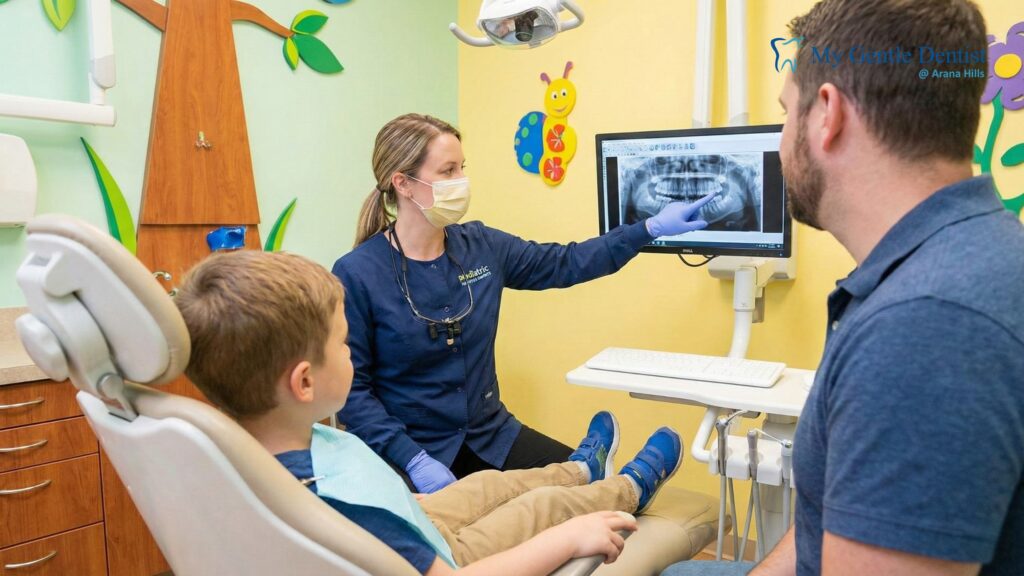
One of the most dangerous myths in pediatric health is the idea that “it’s just a baby tooth” or “it’s just a small chip, we can wait.” In the field of pediatric dentistry, we know that what you cannot see is often more dangerous than what you can.
The Hidden Damage: Root Fractures
The force required to chip a tooth is often transmitted down the long axis of the root. This can cause a horizontal root fracture below the gum line. To the naked eye, the tooth looks fine. It might be slightly loose, or it might not. However, without stabilization (splinting), the movement of chewing will prevent the fracture from healing, leading to infection, abscess, and eventual tooth loss.
Nerve Death (Pulpal Necrosis)
Even a tooth that hasn’t chipped can die from the shock of the impact. The blood vessels entering the tip of the root can be severed or crushed. Over the next few weeks or months, the nerve tissue inside the tooth dies. The tooth may slowly turn grey, pink, or yellow. A dead nerve is a breeding ground for bacteria, leading to a painful abscess that can damage the surrounding bone.
While your standard six-month checkups for Kids dental health are vital for hygiene and cavity prevention, trauma requires specific imaging and vitality testing that goes beyond a standard cleaning. We need to take periapical X-rays from multiple angles to rule out root fractures and check the integrity of the periodontal ligament.
Restorative Options: Rebuilding the Smile
If your child has broken a front tooth, you are likely worried about their appearance. In the age of social media and selfies, a broken front tooth can be a source of significant anxiety for a child or teenager.
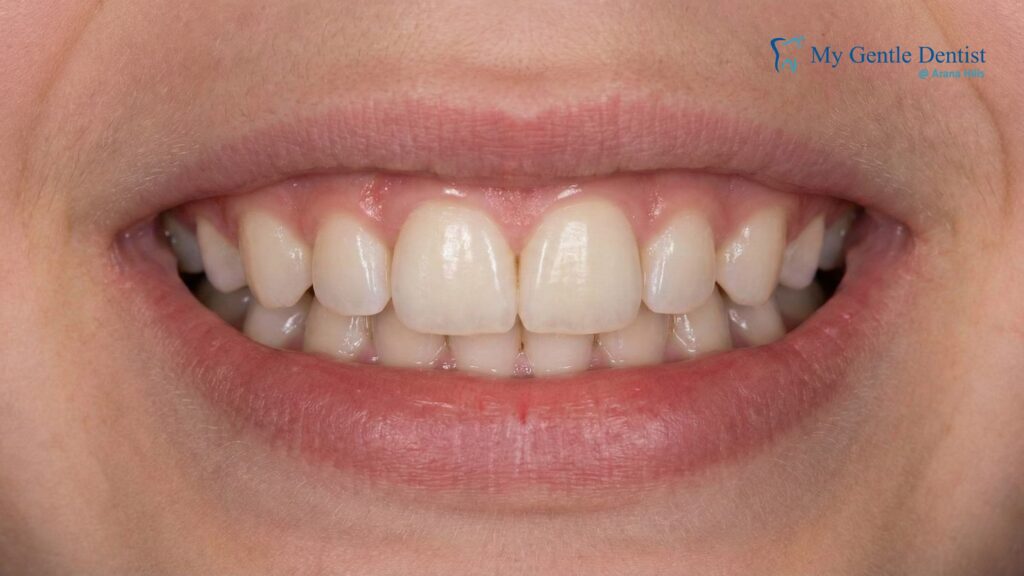
This is why choosing the right provider matters. You want the Best dentist near me for kids to perform the restorative work. We have several high-tech options to restore the tooth to its former glory:
- Composite Bonding: We use high-grade aesthetic resin to sculpt a new edge for the tooth. We layer different shades and opacities to mimic the natural transparency of tooth enamel.
- Reattachment: If you found the fragment, we can bond it back in place. This is often the most aesthetic option because it is the child’s natural tooth structure.
- Veneers: For older teens with fully matured teeth, a porcelain veneer may be an option for extensive fractures.
The goal is not just to patch the hole, but to make the tooth look like the accident never happened.
Navigating the Search: Finding the Right Specialist
When you are stressed and your child is crying, your ability to research is compromised. You might simply type childrens dentist near me into a search bar and click the first result. However, not every general dentist is comfortable treating acute pediatric trauma.
General dentists are fantastic for fillings and crowns, but pediatric trauma is a niche skill set. It requires the ability to manage a frightened child, the equipment to splint mobile teeth, and the knowledge to manage open apices (roots that haven’t finished growing yet).
When you are calling practices, ask the following questions:
- “Do you have time in your schedule for an emergency trauma case right now?”
- “Are you comfortable treating a dental avulsion or luxation in a child?”
- “Do you have nitrous oxide (laughing gas) available to help calm my child?”
Finding the right childs dentist near me for kids who specializes in these situations ensures that we can monitor the tooth’s vitality over the coming months. Trauma treatment is rarely a “one and done” appointment; it is a relationship where we monitor the healing process to ensure no long-term damage occurs to the developing adult teeth.
Prevention: The “Safe Zone” Strategy
As a parent, you cannot wrap your child in bubble wrap, and you shouldn’t ban them from enjoying VR. However, you can mitigate the risks.
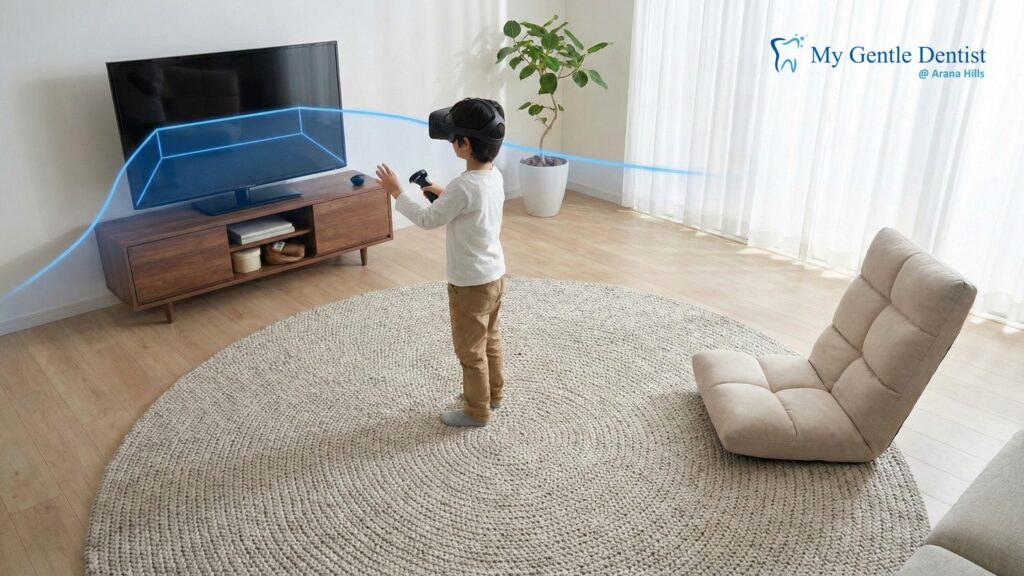
- Establish a Buffer Zone: Most VR headsets allow you to set a “guardian” boundary. Set this boundary at least 3 feet away from any walls or furniture.
- The “Rug Rule”: Place a distinct textural rug in the center of the play area. Tell your child that if they can’t feel the rug under their feet, they have drifted too far and need to reset.
- Spotters: For younger children, never let them play VR unsupervised. Act as a spotter to guide them back to the center if they drift toward the TV or the coffee table.
- Seated Play: Many games offer a “seated mode.” For high-intensity games, encourage your child to play while sitting in a swivel chair. This eliminates the risk of tripping and falling entirely.
Conclusion
Gaming is a fun, immersive part of modern childhood, but it comes with a new set of physical risks that previous generations didn’t have to navigate. If a controller swing or a headset fall has damaged your child’s smile, remember that quick action is the best defense.
Assessing the injury, controlling the swelling, and seeing a professional immediately will give your child the best chance of a full recovery. We have the technology and the techniques to save teeth that would have been lost twenty years ago. The key is getting them into the chair as soon as possible.