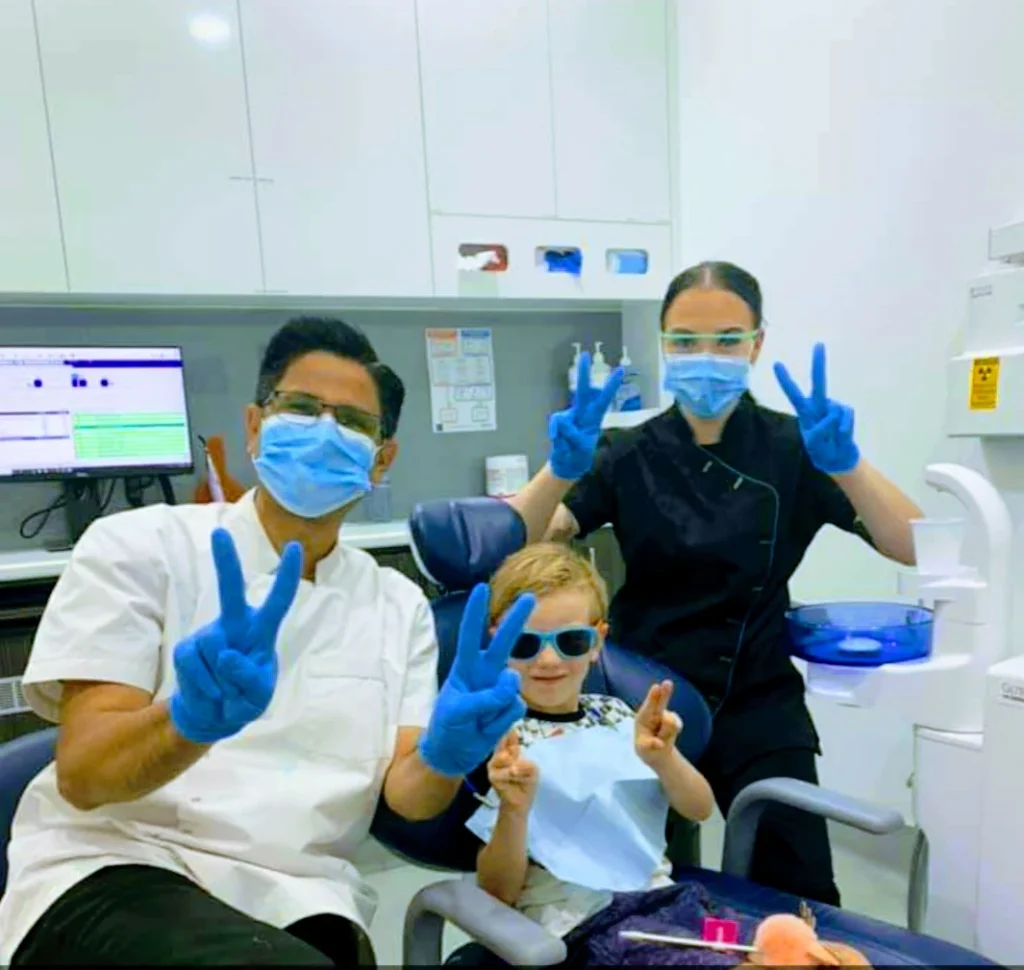
If there is one sound parents dread, it’s the sound of a child crying. Whether it’s a scraped knee or a fear of the dark, our instinct is to protect and comfort. It is no surprise, then, that many parents feel a knot in their stomach when it’s time to schedule a kids dental appointment.
Will it hurt? Will they sit still? What if they have a cavity?
We understand these worries. In the past, dentistry was often associated with discomfort and cold, clinical rooms. But today, the world of kids dental care has changed. It is no longer just about fixing teeth; it is about building trust, fostering confidence, and creating an environment where children actually look forward to their visit.
This guide is dedicated to turning dental anxiety into dental excitement. We will explore how to make oral health a positive part of your child’s life, from their morning brushing routine to their visits at our clinic.
What Kids Dental Care Is and Why It’s Important
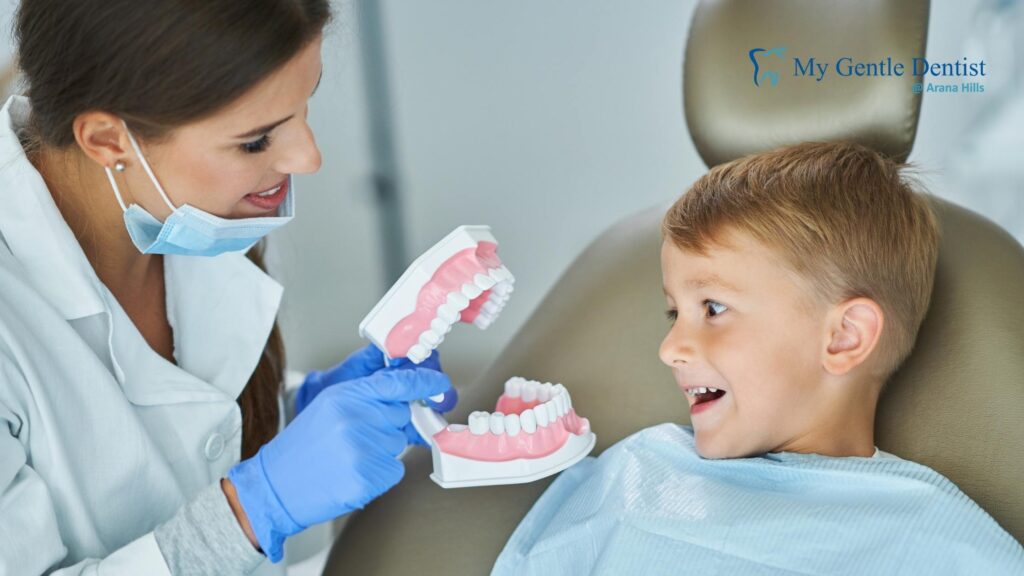
Kids dental care acts as the bridge between a baby’s first gummy smile and a teenager’s confident grin. It is a specific approach to dentistry that prioritizes the emotional and physical development of children.
Why is this specialized focus so important? Because children are not just “mini-adults.” Their teeth are softer, their jaws are constantly growing, and their emotional needs are entirely different.
Prioritizing specific kids dental services offers profound benefits:
- Trauma Prevention: A positive early experience prevents “dental phobia,” ensuring your child grows into an adult who isn’t afraid to seek medical care.
- Habit Formation: We don’t just clean teeth; we teach children how to care for them, instilling habits that last a lifetime.
- Developmental Monitoring: We track how the face and jaw are growing. Catching issues like crossbites or crowding early can simplify future needs.
- Overall Health: Oral health is a window to the rest of the body. Healthy teeth mean better nutrition, better sleep, and better focus in school.
When Parents Should First Search for a Dentist Near Me for Kids
One of the most common questions we get is about timing. Many parents wait until their child has a full set of teeth, or worse, until a child complains of pain, before they start looking for a provider.
However, the “golden rule” of pediatric dentistry is: First visit by the first birthday.
Why so early? Think of it as a “meet and greet.” By bringing your child in when they are one year old, you are introducing them to the sights, sounds, and smells of the clinic in a non-threatening way. There are no scary tools, just a friendly face counting their teeth.
When you take the time to find the Best dentist near me for kids early on, you establish a “dental home.” This means that if an emergency happens later—like a fall on the playground—your child is coming to a place they already know and trust, rather than a strange office during a moment of crisis.
Common Kids Dental Issues and Early Prevention
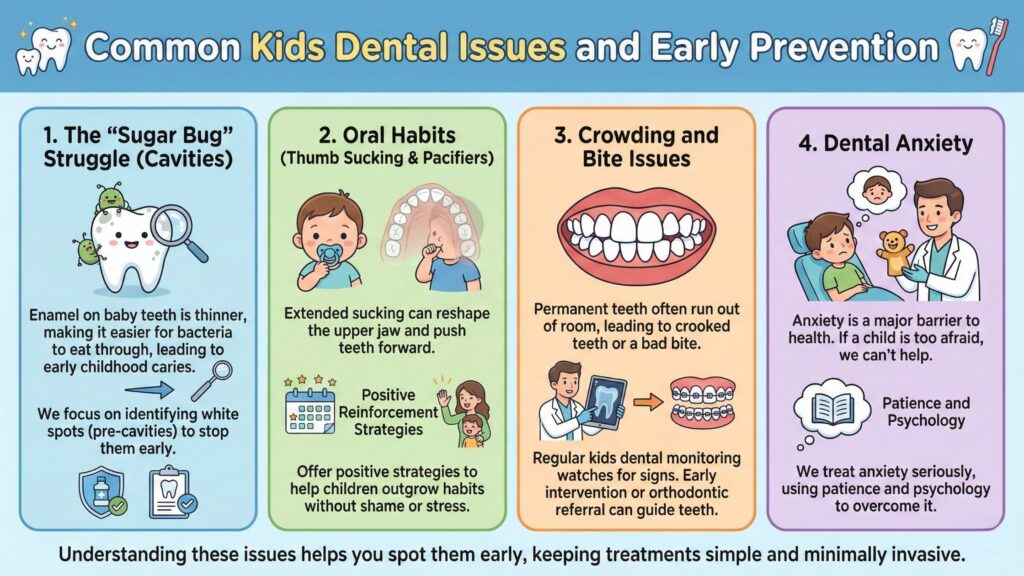
Even with the best brushing habits, children are susceptible to specific oral health challenges. Understanding these issues helps you spot them early, keeping treatments simple and minimally invasive.
1. The “Sugar Bug” Struggle (Cavities)
Enamel on baby teeth is much thinner than on adult teeth, making it easier for bacteria (often called “sugar bugs” to kids) to eat through it. This leads to early childhood caries. We focus on identifying the white spots that indicate pre-cavities so we can stop them before they turn into holes.
2. Oral Habits (Thumb Sucking & Pacifiers)
While these habits are soothing for babies, they can become problematic for toddlers. Extended sucking can reshape the upper jaw and push teeth forward. We offer positive reinforcement strategies to help children outgrow these habits without shame or stress.
3. Crowding and Bite Issues
As the permanent teeth try to navigate their way in, they often run out of room. This can lead to crooked teeth or a bad bite. As part of our kids dental monitoring, we watch for these signs. In some cases, early intervention or a referral for braces and orthodontic treatment can guide teeth into better positions as the child grows.
4. Dental Anxiety
While not a physical tooth problem, anxiety is a major barrier to health. If a child is too afraid to open their mouth, we can’t help them. We treat anxiety just as seriously as we treat cavities, using patience and psychology to overcome it.
At-Home Tips for Strong Kids Dental Health
The dentist chair is only for check-ups; the real work happens in your bathroom every morning and night. Here is how to make home hygiene a battle-free zone:
- Make it a Game: Use apps that turn brushing into a monster-fighting game, or play a 2-minute dance song. If it’s fun, they will want to do it.
- The “Show and Tell” Method: Children learn by mimicking. Brush your teeth alongside them. Let them see you flossing. If they see you prioritizing your kids dental routine (or rather, your adult one), they will follow suit.
- Empower Them: Let your child pick out their own toothbrush (maybe one with their favorite superhero) and their own flavor of toothpaste. Giving them a choice gives them ownership.
- Watch the Snacking: Grazing is the enemy of healthy teeth. Every time a child eats a cracker or drinks juice, an acid attack occurs on the teeth for 20 minutes. Try to stick to set meal and snack times, drinking water in between.
How a Child-Friendly Dental Clinic Makes a Difference
You might wonder, “Can’t I just take my child to my regular dentist?” While many general dentists are capable, there is a distinct difference in the experience provided by a clinic focused on kids dental needs.
When you search for a childrens dentist near me, you are looking for an environment engineered for comfort.
- Size Matters: Our equipment is scaled down. We use smaller X-ray sensors that don’t gag children and smaller brushes that fit comfortably in tiny mouths.
- Distraction Therapy: We know that a bored child is a fidgety child. Our treatment areas often feature ceiling-mounted TVs or fun visuals to keep their minds occupied while we work.
- The “Tell-Show-Do” Technique: We never surprise a child. We tell them we are going to brush their tooth, show them the spinning brush on their fingernail so they feel the vibration, and only then do the cleaning. This builds immense trust.
Kids Dental Treatments (Checkups, Cleanings, and Preventive Care)
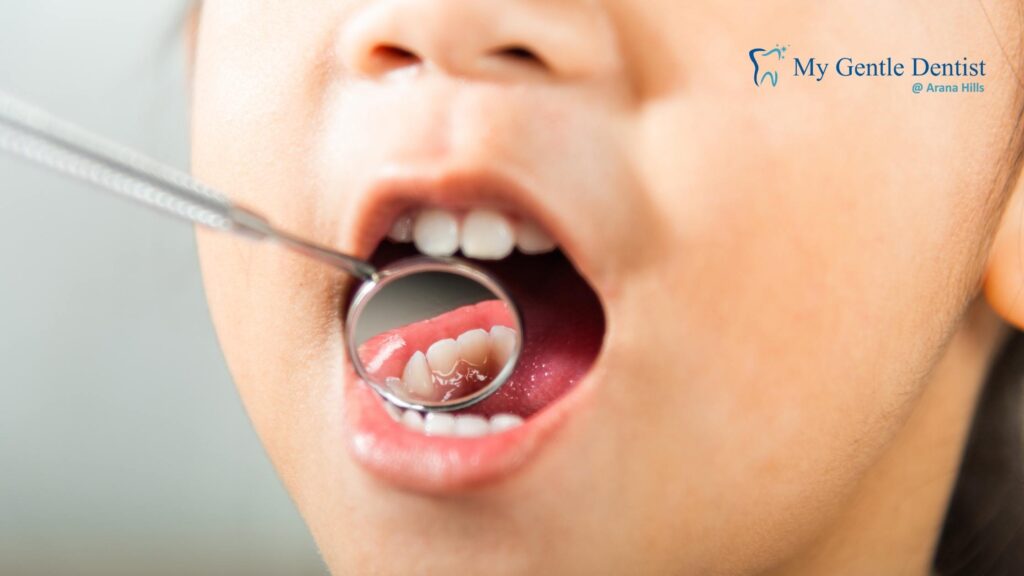
Our goal is to keep treatment as minimal as possible. Here is what a typical kids dental journey looks like in our office:
Routine Exams and Cleanings
This is the cornerstone of care. We gently remove plaque and tartar that a toothbrush can’t reach. We also use this time to educate your child, showing them in a mirror where they missed brushing so they can do better next time.
Fluoride Varnish
Think of fluoride as a shield. After cleaning, we apply a vitamin-mineral varnish that strengthens the enamel, making it harder for cavities to form. It’s quick, painless, and tastes like fruit!
Dental Sealants
Back teeth are rough and uneven—perfect hiding spots for food. Sealants are thin, invisible coatings we paint onto the chewing surfaces of molars. They “seal out” food and bacteria, reducing the risk of cavities in those teeth by up to 80%.
Restorative Care
If a cavity does happen, don’t panic. Modern restorative techniques are gentle. We offer tooth-colored fillings that blend in perfectly, ensuring your child’s smile stays white and bright.
FAQs Parents Search for Online About Kids Dental Care
Q: My child is terrified of the dentist. What should I do? A: This is a very common concern. First, try to role-play at home. Avoid using scary words. When you are looking for a childs dentist near me for kids, call the office beforehand. Let us know about the anxiety. We can schedule a “happy visit” where no work is done—just a tour and a prize—to build positive associations.
Q: When will my child lose their baby teeth? A: The tooth fairy usually starts visiting around age 6, starting with the lower front teeth. However, the timeline varies. Some kids start at 4, others at 7. As long as the teeth are healthy, the timing isn’t usually a worry.
Q: Do baby teeth really need fillings? A: Yes. An untreated cavity in a baby tooth can spread to the nerve, causing an abscess or infection that can damage the developing adult tooth underneath. It can also cause severe pain, affecting your child’s ability to eat and sleep.
Q: How often should we visit? A: Generally, every six months. However, if your child is at high risk for cavities or has braces, we might recommend more frequent visits to keep everything on track.
Conclusion: Book Your Visit and Banish the Fear
Your child’s relationship with their dentist doesn’t have to be a source of stress. It can be a relationship built on high-fives, shiny stickers, and proud smiles.
By choosing a provider who understands the unique physical and emotional needs of children, you are investing in their future health and confidence. You are teaching them that taking care of themselves is a positive, rewarding experience.
Whether you are looking for that first “well-baby” check or need a gentle hand for a nervous energetic toddler, we are ready to welcome you.
Ready to see your child smile with confidence? Stop scrolling through search results for a “dentist near me for kids” and come meet a team that treats your family like our own. Contact us today to schedule your child’s appointment! Let’s make healthy teeth a fun part of growing up.