

Losing a single tooth is difficult, but losing multiple adjacent teeth can be entirely devastating to your quality of life. Suddenly, eating your favorite foods becomes a painful challenge, your speech may alter, and you may find yourself hiding your smile in social situations.
For decades, the standard solution for replacing a row of missing teeth was a traditional removable partial denture or a traditional fixed bridge. While these options provided aesthetic relief, they came with significant drawbacks. Today, the gold standard in restorative dentistry for multiple missing teeth is the implant bridge.
This remarkable innovation combines the spanning coverage of a traditional bridge with the bone-preserving, rock-solid stability of the implant procedure. In this extensive guide, we will explore how an implant-supported bridge works, why it outperforms older methods, and what the process looks like.
Understanding the Problem with Traditional Solutions

To appreciate the brilliance of an implant bridge, we must first understand the flaws in the traditional methods it replaces.
The Flaws of Traditional Fixed Bridges
A traditional bridge replaces a missing tooth (or teeth) by literally bridging the gap. It consists of artificial teeth suspended between two dental crowns. To hold the bridge in place, the dentist must aggressively grind down the healthy, natural teeth on either side of the gap to fit the crowns over them.
- The Issue: You are permanently damaging two healthy teeth to replace the missing ones. Furthermore, traditional bridges do not stimulate the underlying jawbone, leading to inevitable bone loss beneath the artificial teeth.
The Flaws of Partial Dentures
Removable partial dentures clasp onto your remaining natural teeth for support.
- The Issue: The metal clasps put immense, unnatural stress on the supporting teeth, often loosening them over time. Partials can also slip while speaking or eating, and like traditional bridges, they offer zero protection against jawbone deterioration.
Enter the Implant Bridge: A Structural Masterpiece
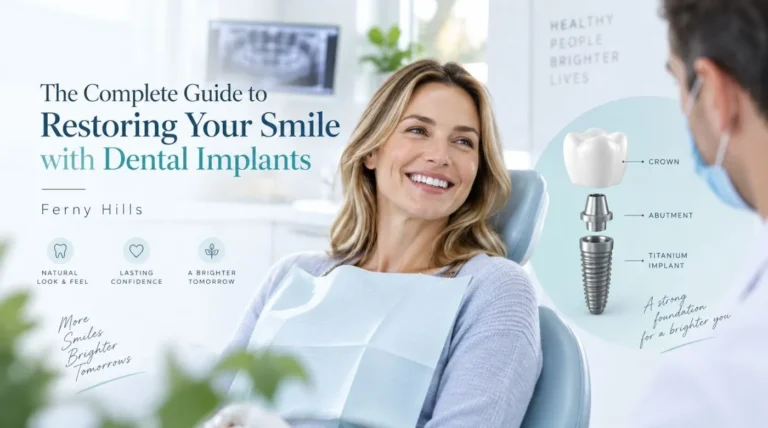
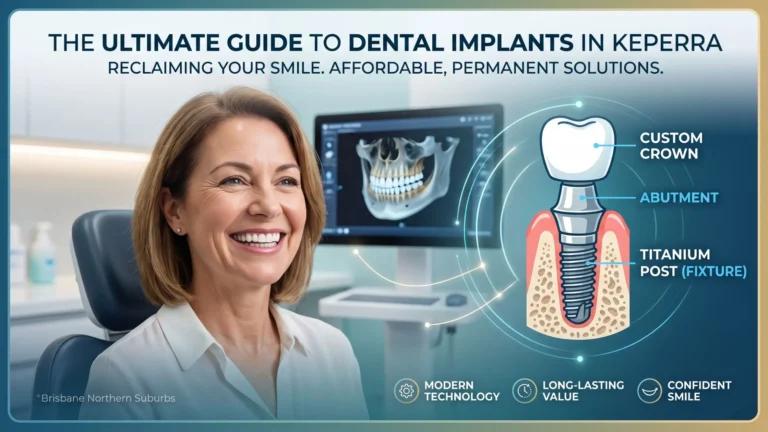
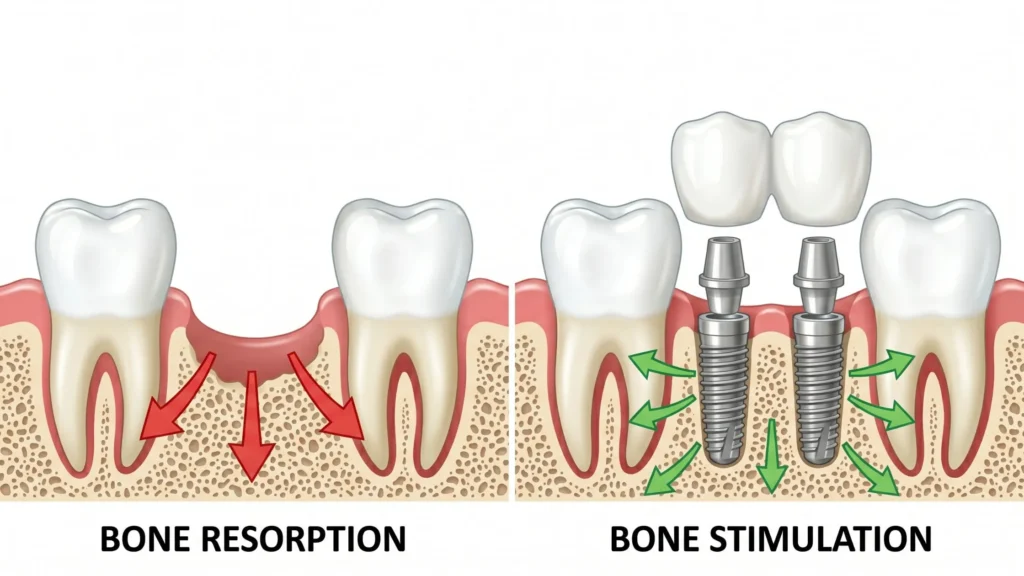
An implant bridge bypasses all the destructive flaws of traditional methods. Instead of relying on your natural teeth or resting heavily on your gums, it is anchored entirely by strategically placed titanium posts surgically inserted into your jawbone.
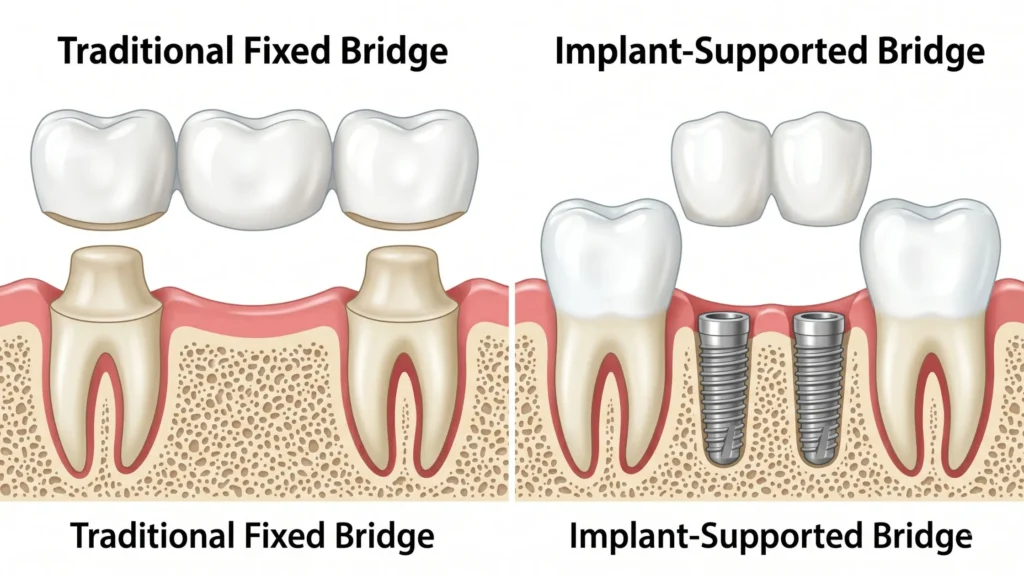
Here is how the mechanics work: If you are missing three or four teeth in a row, you do not necessarily need three or four individual implants. A skilled implant dentist near me can place two titanium posts at either end of the gap. Once these posts have healed and fused with the bone, a custom-crafted bridge (consisting of the required number of artificial teeth) is permanently screwed or cemented onto those two sturdy posts.
The Unmatched Benefits
- Protects Healthy Teeth: Because the bridge is supported entirely by the implants, your remaining natural teeth are left completely untouched and pristine.
- Preserves the Jawbone: The titanium posts act just like natural tooth roots, transmitting chewing forces down into the jawbone. This vital stimulation halts bone resorption and preserves your facial structure.
- Unwavering Stability: Unlike partial dentures that slip and slide, an implant-supported bridge is permanently fixed in your mouth. You can bite into an apple, chew a steak, and speak with absolute confidence.
- Exceptional Aesthetics: The artificial teeth and the implant crown components are crafted from high-end ceramics or zirconia, designed to mimic the exact light-reflecting properties of natural enamel.
The Step-by-Step Implant Bridge Procedure
If you are considering this transformative treatment, here is what the implant procedure generally entails.
Phase 1: Planning and Preparation
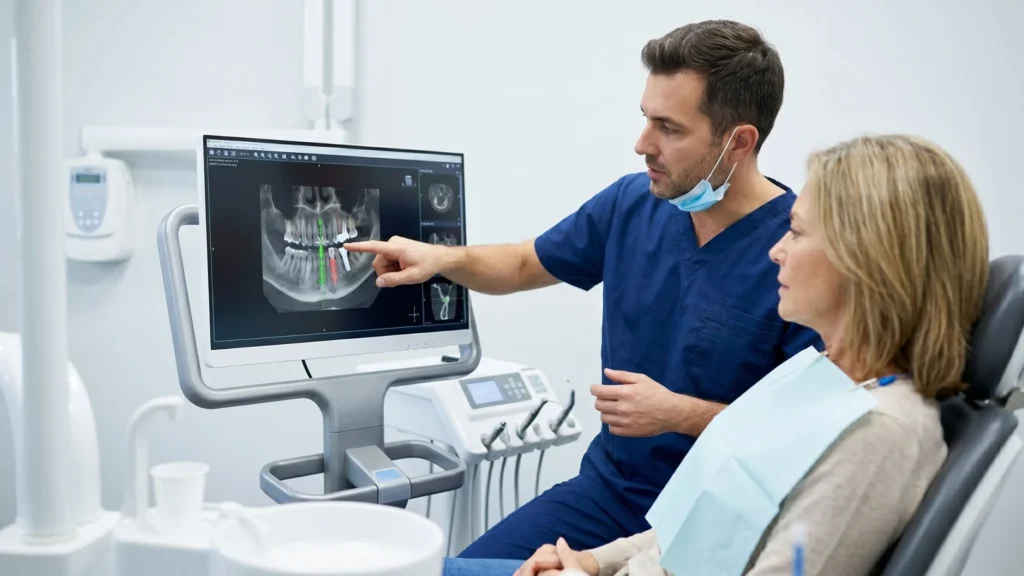
Your journey begins with high-resolution 3D imaging. Your dentist must carefully evaluate the density of your jawbone to ensure it can support the titanium posts. If the teeth have been missing for a long time and the bone has shrunk, you may require an implant bone graft to rebuild the foundation before the surgery can proceed.
During this phase, you will also discuss the overall implants teeth cost and timeline so there are no surprises.
Phase 2: Surgical Placement
Under local anesthesia (and sedation if requested), the dentist will surgically place the titanium fixtures into the jawbone at the precise angles planned during the 3D imaging phase. If you are receiving a bridge to replace three teeth, typically two implants will be placed.
Phase 3: The Healing Phase (Osseointegration)
You will not leave the clinic with your final permanent teeth on surgery day. Your body needs time to perform osseointegration—the process where the jawbone physically grows around and fuses to the titanium posts. This crucial healing period takes anywhere from three to six months. During this time, your dentist can provide a temporary cosmetic solution so you are not without teeth. Should any severe structural issue or injury occur to your temporary teeth, seeking immediate emergency dental treatment keeps your underlying posts protected.
Phase 4: Attaching the Permanent Bridge
Once the implants are solidly fused to the bone, you will return to the clinic. Your dentist will take highly accurate digital impressions of the healed implants and your surrounding teeth.
Master technicians in a dental laboratory will use these impressions to fabricate your custom implant dental bridge. When it is ready, your dentist will attach the bridge to the implants, making any micro-adjustments necessary to ensure your bite is perfectly balanced and the aesthetics are flawless.
Is an Implant Bridge Right for You?
An implant bridge is an ideal solution for patients who:
- Are missing three or more adjacent teeth.
- Want a permanent, non-removable solution.
- Refuse to damage their remaining healthy teeth to support a traditional bridge.
- Have adequate bone density (or are willing to undergo bone grafting).
- Are committed to maintaining excellent oral hygiene.
The Long-Term Value: Analyzing the Implants Teeth Cost
When evaluating the implants teeth cost for a bridge, it is important to think long-term. Yes, the initial surgical and prosthetic costs are higher than a cheap removable partial denture.
An implant-supported bridge is a one-time structural investment. Because it preserves your bone and does not rely on biological teeth for support, a well-maintained implant bridge can easily last the rest of your life. When you calculate the cost of repeated replacements associated with older methods, the implant approach often proves to be the most financially sound decision over a lifetime.
Maintaining Your Investment
Caring for an implant bridge is straightforward, but it requires dedication. While the ceramic materials cannot decay, the gums surrounding the titanium posts are still susceptible to disease.
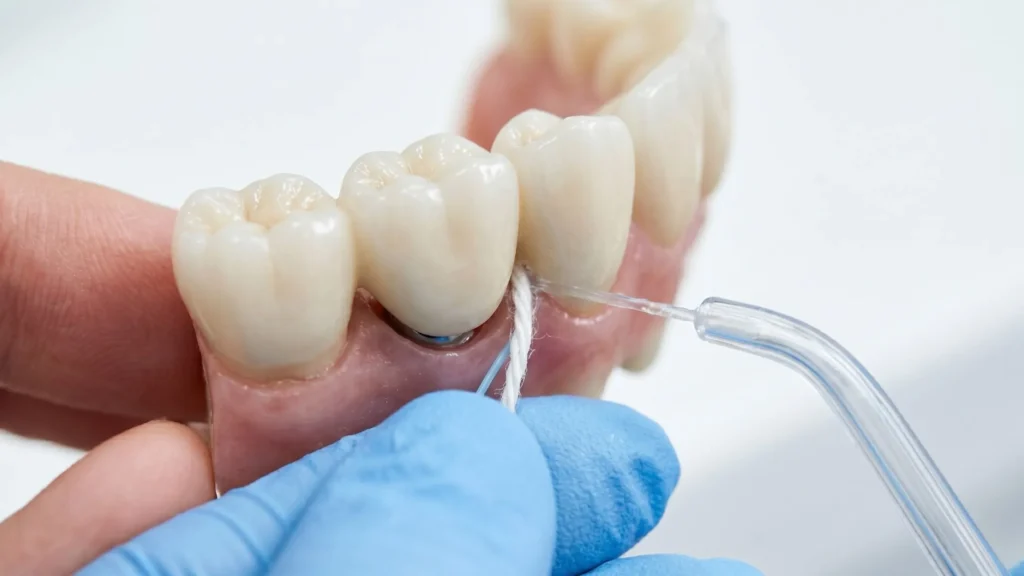
You must brush twice daily, paying special attention to the gum line. More importantly, you must use specialized floss threaders or a high-quality water flosser to clean underneath the artificial teeth of the bridge to remove trapped food particles and plaque. Regular professional cleanings every six months are absolutely mandatory to ensure the long-term health of your underlying implants.
Conclusion
Living with multiple missing teeth is a burden you no longer have to bear. The implant bridge represents the pinnacle of modern dental restoration, offering a seamless blend of rock-solid function and stunning aesthetics. By choosing a solution that protects your remaining teeth and preserves your jawbone, you are not just fixing your smile—you are making a profound investment in your long-term health and confidence. Schedule a consultation with an experienced implant specialist today to explore how this remarkable technology can transform your life.