
📝 The TL;DR (Too Long; Didn’t Read)
- The Old Way: Traditional bridges damage healthy teeth; removable partials are bulky and slip.
- The New Way: An implant bridge is anchored directly to the jawbone using titanium posts.
- The Benefit: No damage to adjacent teeth, permanent stability, and a flawless aesthetic finish.
📌 Table of Contents
- Beyond Traditional Dentures
- The Mechanics of a Permanent Bridge
- Why It’s the Gold Standard
- The Journey to Restoration
- Analyzing the Investment
- Next Steps
Beyond Traditional Dentures
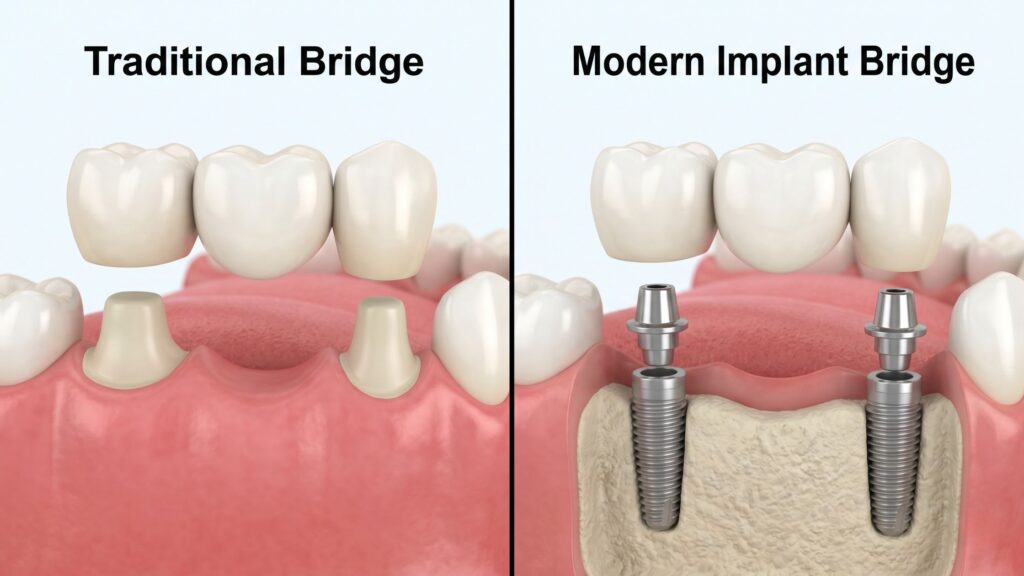
Missing multiple teeth in a row affects everything from how you speak in a boardroom to how you enjoy a steak dinner. For years, patients had to settle for removable partial dentures (which click and shift) or traditional bridges (which require grinding down perfectly healthy adjacent teeth to act as supports).
Today, restorative dentistry offers a far superior, edutaining, and highly functional upgrade.
The Mechanics of an Implant Bridge
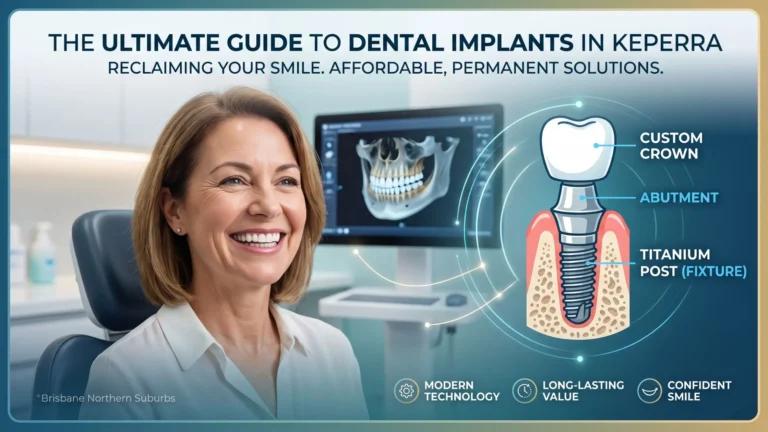
An implant bridge skips the healthy teeth entirely. Instead of resting on your gums or adjacent teeth, it is supported by artificial titanium roots surgically placed into your jawbone.
For example, if you are missing three teeth, you do not need three separate posts. A skilled clinician will place two posts at the edges of the gap. Once healed, a stunning, custom-milled three-tooth bridge is permanently secured to those two anchors.
Why It’s the Gold Standard of Care
Why do modern clinicians overwhelmingly recommend this approach over a single implant crown for every missing tooth?
- Preserves Healthy Enamel: Your surrounding natural teeth remain 100% untouched.
- Bone Preservation: The titanium posts actively stimulate the jawbone, preventing the “sunken face” look associated with tooth loss.
- Unshakeable Confidence: You can eat apples, steak, and corn on the cob without a second thought. It never moves.
💡 Clinical Pro-Tip: A permanent bridge requires special cleaning techniques. Since the teeth are connected, you cannot use standard floss. A water flosser will become your new best friend for maintaining pristine gum health!
The Journey to Restoration
The implant procedure for a bridge is meticulously staged for maximum safety and aesthetic perfection:
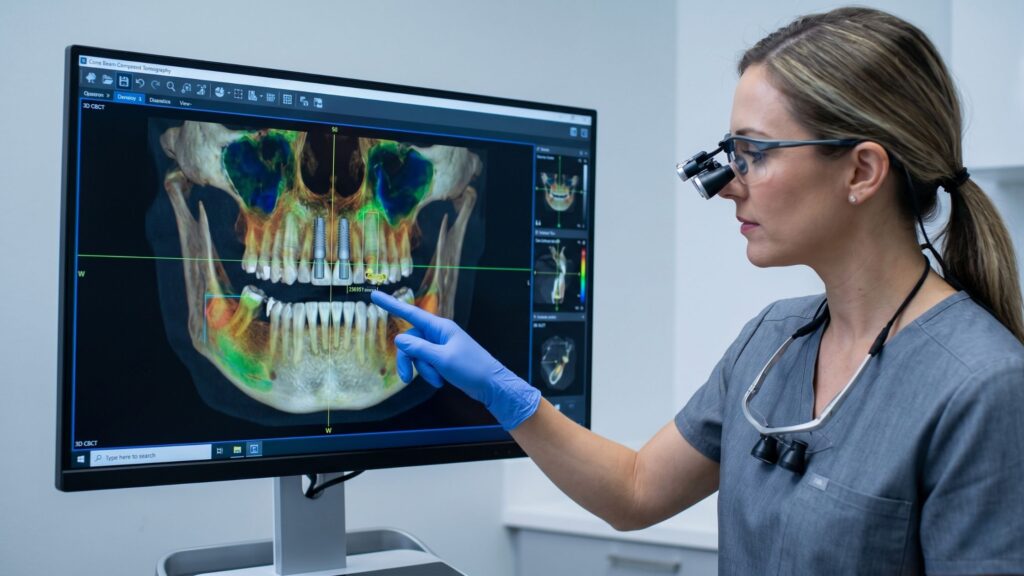
- 3D Mapping: We assess your jaw’s anatomy to pinpoint the exact optimal angle for the posts.
- Precision Placement: The titanium anchors are placed into the bone.
- The Fusing Phase: You wait a few months for the posts to biologically fuse to your jaw.
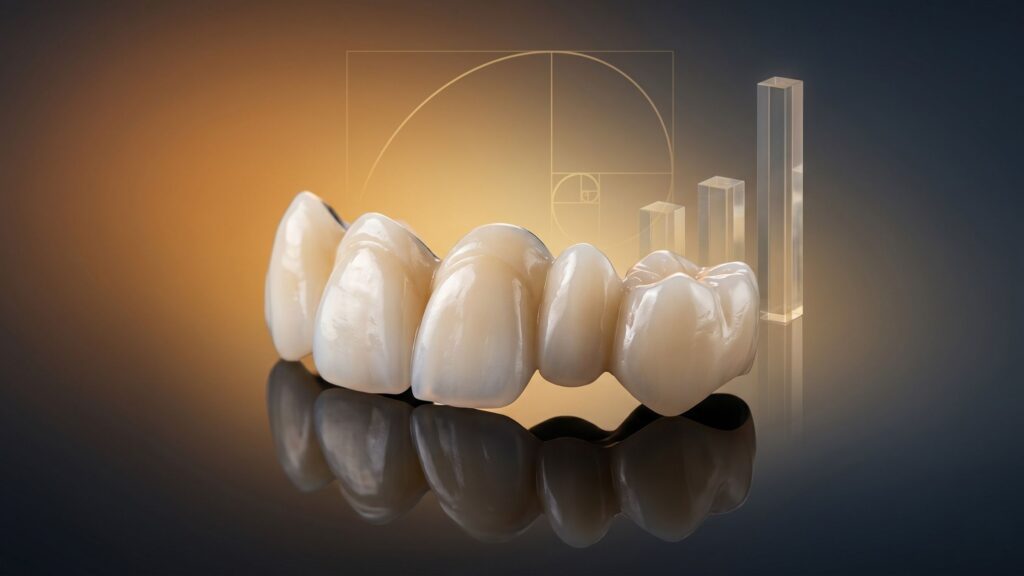
- The Grand Reveal: Your custom-designed bridge is permanently attached.
Analyzing the Investment
When researching the implants teeth cost, a multi-tooth bridge is highly efficient. Because it utilizes fewer titanium posts to replace multiple teeth, it provides exceptional clinical value compared to replacing each tooth individually.
Furthermore, while the upfront cost of a permanent bridge is higher than a removable plastic denture, its lifespan is exponentially longer. A well-maintained titanium-supported bridge is a permanent upgrade to your quality of life.
Finding the Right Expert
Complex multi-tooth restorations require an advanced understanding of bite mechanics (occlusion) and soft tissue management. Don’t just search for an “implant dentist near me” and click the first result. Look for a practice with a documented portfolio of seamless, high-fidelity bridge restorations.